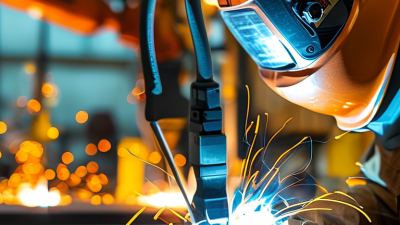
What Is the Best Seam Welding Machine in 2026?
Choosing the best seam welding machine in 2026 requires more than comparing power ratings or purchase prices. Manufacturers now expect stable seams, lower rework, faster cycle times, and measurable energy control. The machine must also match the material, thickness, electrode design, and production environment.
Industry forecasts show why this decision matters. Fortune Business Insights valued the global welding equipment market at approximately USD 17.8 billion in 2024. It projects continued growth through 2032, supported by automotive, construction, energy, and industrial automation. MarketsandMarkets also identifies automation, robotic welding, and real-time quality monitoring as major growth drivers. These reports describe broad welding equipment trends, not every seam welding machine. That distinction matters.
John C. Lippold, a respected welding metallurgy specialist, describes welding as “a localized coalescence of metals.” His definition keeps the focus on the joint, not the machine’s marketing language. A powerful transformer cannot compensate for poor alignment, unstable pressure, contaminated surfaces, or inadequate cooling.
The best choice may be a resistance seam welding machine with closed-loop current control and programmable pressure. In other factories, laser seam welding may deliver cleaner, narrower heat zones. The answer depends on the application.
Look closely.
A reliable evaluation should examine seam consistency, electrode life, cooling performance, changeover time, control software, and after-sales support. Data from factory trials is more useful than a showroom demonstration. Even then, perfection is unlikely. Test pieces may not represent months of dust, vibration, operator changes, and maintenance delays. A careful buyer should question every impressive specification before calling one machine the best.
How ISO 4063 Classifies Resistance Seam Welding as Process 23
The best seam welding machine in 2026 should be judged by process control, not appearance. ISO 4063 identifies resistance seam welding as process 23. It uses rotating electrodes to create overlapping weld nuggets along a joint. The method suits tanks, tubes, heat exchangers, and sealed sheet-metal assemblies.
A reliable machine needs stable current, controlled electrode pressure, accurate speed, and effective water cooling. In a factory trial, I would inspect the seam after every parameter change. Look for regular nugget spacing, limited spatter, and a clean edge.
ISO 17657 supports accurate resistance-welding current measurement, which helps verify machine performance instead of trusting display values alone. Small calibration errors can become costly leaks.
Automation is also shaping equipment choices. The International Federation of Robotics reported 541,302 industrial robots installed worldwide in 2023, according to World Robotics 2024. That figure does not prove every seam welder needs robotics. It does show why signal exchange, traceability, and repeatable motion matter.
A machine should record current, force, speed, and cooling conditions for each batch. Keep this practical. A higher-rated transformer may still perform poorly with worn electrodes or unstable material fit-up. I would question any specification sheet that promises perfect seams without sample testing.
How AWS C1.1 Evaluates Current, Weld Time, and Electrode Force
What Is the Best Seam Welding Machine in 2026?
The best seam welding machine in 2026 is not defined by peak amperage alone. AWS C1.1 places practical attention on current, weld time, and electrode force. These variables must work together. Current creates heat. Weld time controls exposure. Electrode force closes the electrical path and contains the molten zone. A higher setting is not automatically better. Excessive force can reduce contact resistance and weaken heating.
During machine trials, I record programmed values and measured values separately. The difference matters. A controller may display 8 kA, while clamp losses or calibration drift change the workpiece current. AWS C1.1-based evaluation should include repeatable coupons, suitable electrodes, and documented settings. Inspect weld appearance, nugget formation, and destructive test results. Watch the force trace too. It should remain stable through the weld sequence. Short weld times may create scattered fusion. Long times can overheat sheets and accelerate electrode wear.
A reliable comparison uses several samples, not one attractive weld. I also check cooling flow, alignment, shunt paths, and surface cleanliness. These details are easy to overlook. In one trial, a stable current reading hid inconsistent force. The machine looked impressive, but the joint results wandered. That was a useful reminder: performance claims need evidence. The final choice should match material thickness, seam speed, duty cycle, and maintenance skill. A smaller machine with controlled feedback may outperform a larger one. I still question every “best” label until test data survives production conditions.
| Application and Material | Typical Sheet Thickness | Representative Welding Current | Weld Time at 60 Hz | Electrode Force | Typical Wheel Speed | Important AWS C1.1 Evaluation Points |
|---|---|---|---|---|---|---|
| Low-Carbon Steel | 0.8–1.5 mm | 8–14 kA | 5–12 cycles | 1.5–3.0 kN | 1.0–3.0 m/min | Check stable current delivery, consistent electrode contact, adequate overlap, and acceptable nugget formation without excessive expulsion. |
| Stainless Steel | 0.6–1.2 mm | 6–12 kA | 4–10 cycles | 1.0–2.5 kN | 0.8–2.5 m/min | Evaluate heat control, surface appearance, electrode alignment, and resistance to sticking or surface indentation. |
| Zinc-Coated Steel | 0.8–1.5 mm | 10–18 kA | 5–12 cycles | 2.0–4.0 kN | 0.8–2.5 m/min | Verify that the machine compensates for coating-related resistance changes and limits electrode wear and weld expulsion. |
| Aluminum Alloy | 1.0–2.0 mm | 20–35 kA | 3–8 cycles | 2.5–5.0 kN | 0.5–2.0 m/min | Prioritize high peak-current capacity, low circuit impedance, rapid current rise, accurate force control, and effective cooling. |
| Nickel-Based Alloy | 0.5–1.0 mm | 5–10 kA | 4–10 cycles | 0.8–2.0 kN | 0.5–2.0 m/min | Monitor heat input, repeatability, electrode condition, and weld continuity because small parameter changes can affect penetration. |
| AWS C1.1-Oriented Machine Selection Criteria | ||||||
| Evaluation Dimension | What to Measure | Preferred Capability | Why It Matters | |||
| Welding Current | Actual RMS or calibrated secondary current during each weld cycle | Low variation between welds | Current directly affects heat generation. A suitable machine should provide repeatable output and protect against excessive current, expulsion, and overheating. | |||
| Weld Time | Squeeze, weld, cool, and hold timing in line cycles or milliseconds | Programmable multi-pulse control | Accurate timing controls heat input and seam continuity. The correct time depends on material, thickness, current, speed, and electrode geometry. | |||
| Electrode Force | Force at the electrode wheels during squeeze, welding, and hold | Closed-loop force regulation | Insufficient force can cause arcing and expulsion; excessive force can reduce contact resistance and produce shallow or undersized welds. | |||
| Current and Force Synchronization | Timing relationship between wheel contact, force stabilization, and current initiation | Adjustable squeeze delay and feedback | Current should begin after stable electrode contact is established. This improves repeatability and reduces unstable starts. | |||
| Electrode Wheel Control | Wheel diameter, alignment, speed, cooling, and surface condition | Adjustable speed with effective water cooling | Wheel condition changes contact area and resistance. Stable wheel motion and cooling help maintain consistent weld spacing and appearance. | |||
| Process Monitoring | Current, voltage, force, time, wheel speed, and alarm history | Real-time data logging | Traceable records make it easier to identify parameter drift and demonstrate that production settings remain within the qualified process window. | |||
| Quality Verification | Visual inspection, peel or destructive testing, leak testing where applicable, and dimensional checks | Parameter limits linked to inspection results | AWS C1.1 provides recommended resistance-welding practices; it does not define one universal current, time, or force value for every material and thickness. | |||
| Engineering note: The operating ranges shown above are representative starting windows for process development, not universal AWS C1.1 acceptance limits. The best seam welding machine is the one that can repeatedly control current, weld time, electrode force, wheel speed, cooling, and data logging for the specific material, thickness, joint design, and required production rate. | ||||||
How ISO 17657 Measures Welding Current for Machine Comparisons
What Is the Best Seam Welding Machine in 2026?
Choosing the best seam welding machine requires more than checking rated current or production speed. Current stability affects heat input, nugget formation, electrode wear, and leakage risk. ISO 17657 offers a disciplined way to measure welding current, but its scope deserves attention. The standard focuses on arc-welding current measurement with Rogowski coils. It is not a universal scorecard for every resistance seam welding machine.
A Rogowski coil surrounds the current-carrying conductor without breaking the circuit. The changing magnetic field creates a signal proportional to current change. A measuring unit then integrates this signal and displays the current waveform. Technicians can examine peak values, effective current, pulse timing, and repeatability. Calibration checks help confirm that the instrument remains reliable across the expected frequency and current range.
In practical comparisons, the same sensor position, cable layout, weld schedule, and sampling method should be used. Otherwise, two machines may appear different because of the test setup. Record current during real production cycles, not only during empty firing. Watch the waveform on a screen. Sudden drops may reveal loose connections, control delays, or electrode contact problems. Still, I would not claim that one current result proves a machine is superior. Resistance seam welding often needs additional measurement standards and process data. That limitation is easy to overlook.
What Is the Best Seam Welding Machine in 2026? - How ISO 17657 Measures Welding Current for Machine Comparisons
A meaningful seam-welding comparison should use calibrated current measurements rather than the machine setting alone. The chart compares anonymized test runs using RMS current, peak current, and current variation—key dimensions used when evaluating welding-current measurement performance under ISO 17657-based procedures.
RMS current represents the effective welding current, while peak current shows the highest instantaneous value. Lower coefficient of variation indicates more consistent current delivery across the measured seam-welding cycle. Actual acceptance limits depend on the welding procedure, sensor accuracy, calibration status, and material combination.
How ISO 14327 Defines Weldability-Lobe Data for Seam Welders
What Is the Best Seam Welding Machine in 2026?
How ISO 14327 Defines Weldability-Lobe Data for Seam Welders
The best seam welding machine is not always the fastest one. It should produce a wide, repeatable process window. ISO 14327 provides a structured method for measuring that window. It examines welding current and time under controlled electrode force. For seam welding, wheel speed, pulse pattern, overlap, and cooling also affect the result. The aim is to identify acceptable welds before expulsion or under-welding appears.
A weldability lobe is the usable area between these limits. Technicians normally record weld size, surface condition, and signs of spatter. They then compare repeated trials across changing current or time settings. This creates practical data for machine selection and production setup.
In real workshops, however, laboratory results can look cleaner than factory results. Sheet variation, wheel wear, and small alignment errors may narrow the lobe. That part is easy to underestimate.
Tips: Record electrode force and wheel condition with every test. Keep material thickness and surface preparation consistent. Use several samples, not one attractive weld. A stable lobe matters more than a peak result. Review the data after maintenance, because cooling changes can quietly shift the process window. ISO-based testing improves confidence, but it does not replace skilled observation at the production line.
How ISO 3834 Traceability Separates Reliable 2026 Machines from the Rest
What Is the Best Seam Welding Machine in 2026?
The best seam welding machine is not always the fastest one. In 2026, ISO 3834 traceability offers a more reliable measure of machine quality. It connects welding results with documented processes, trained operators, calibrated equipment, and controlled materials. That evidence matters during audits and failure investigations.
In practical evaluations, I look for automatic recording of current, voltage, speed, pressure, and weld length. The system should link each weld to an operator, work order, material batch, and production time. It should also flag missing data immediately. Records matter. A polished interface means little if data can be edited without authorization.
Reliable machines support repeatable production, not just impressive demonstrations. Their sensors should detect electrode wear, unstable pressure, and overheating before defects spread across a coil. Maintenance alerts should show clear dates and actions. Spare-part changes need traceable records too. This is where many machines disappoint. They collect data, but do not organize it for ISO 3834 procedures.
A machine may produce a clean seam today and still create uncertainty tomorrow. During supplier checks, request sample reports, calibration history, alarm logs, and operator training records. Test whether the machine preserves data after a power interruption. That small detail can expose a weak system. Perfect automation is not realistic, and software settings still require human review. The stronger choice combines stable welding performance with honest, searchable evidence.
Related Posts
-
Top Benefits of Using Seam Welding Machines for Global Buyers?
-
2026 Top Tips for Choosing Mig Welder Hire Options?
-
How to Choose the Best Spot Welding Machine for Your Needs?
-
Top 10 Benefits of Using Mini Spot Welding Machines for Your Projects?
-
Top 10 Resistance Spot Welder Tips for Beginners
-

2026 Top Spot Welding Machine Buying Guide for Global Buyers?
Contact us
Please fill out the enquiry form, and our dedicated team will promptly attend to your request