7 Best Welding Steel Grades for Global Buyers?
Choosing welding steel is rarely a simple grade-to-grade comparison. Buyers must match strength, chemistry, thickness, forming needs, and the welding process. A plate that performs well in a workshop may behave differently on a humid jobsite or under repeated loading. Details matter.
This guide compares seven widely purchased options: ASTM A36, A572 Grade 50, AISI 1018, 1020, 1045, 304 stainless, and 316 stainless. Their names are not interchangeable across national standards. Confirm the governing specification, mill test certificate, and actual chemistry before ordering. Even familiar grades can vary by product form and supply source.
John C. Lippold, a respected welding metallurgy researcher, has written extensively about how welding affects metals. The following is an editorial paraphrase of that body of work, not a verbatim quotation: “Good weldability depends on the steel, the procedure, and the conditions around the joint.” A useful reminder. Preheat, filler selection, joint design, and restraint can change results. Buyers should ask suppliers for traceable material data and consult qualified welding professionals when a project has demanding service conditions. This article offers a practical starting point, not a substitute for a procedure qualified for the job. One point deserves scrutiny: “best” is often a purchasing shortcut. The right welding steel is the grade that meets the design requirements and can be reliably fabricated.
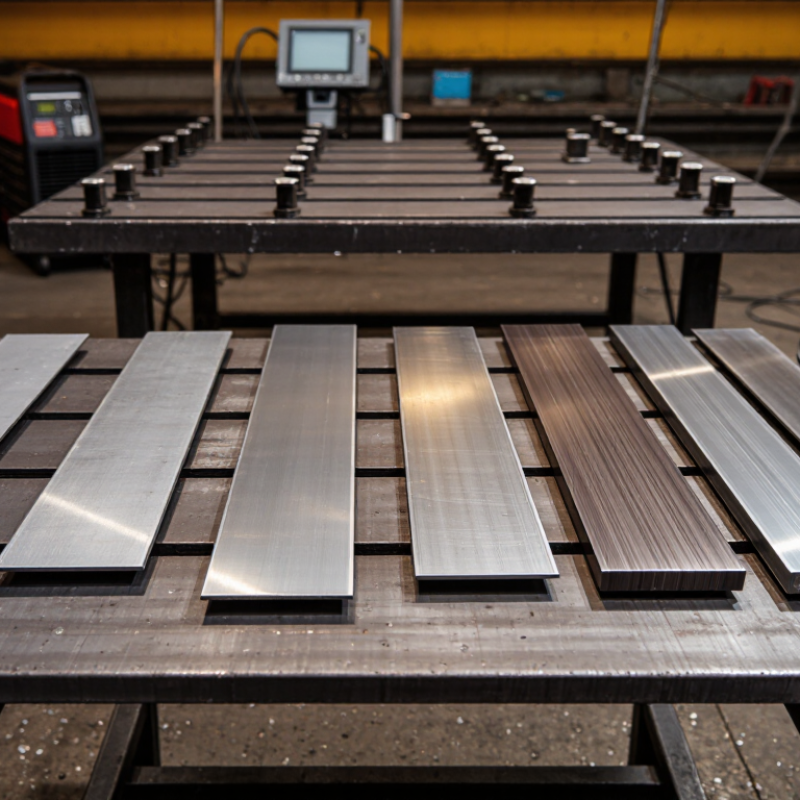
What Makes a Steel Grade Suitable for Welding?
A steel grade is suitable for welding when its chemistry, thickness, and service conditions work with the chosen process. Low-carbon steels are often easier to weld because they generally form less hard, brittle material near the weld. Higher-strength grades may need tighter control of heat input and cooling. There is no universal best grade.
Check the material certificate for carbon content and, where available, carbon equivalent. Carbon equivalent helps estimate hardening risk, but the calculation method matters. Thick plate, cold weather, and restrained joints can increase cracking risk. Clean edges, correct joint fit-up, and suitable filler metal also affect weld quality. Fit-up matters. A grade that welds well in a thin sheet may behave differently in a thick structural section, so a small coupon test can reveal problems before production.
Tips: Confirm the applicable material specification and welding procedure. Keep consumables dry, especially when hydrogen-sensitive steel is involved. Record preheat and interpass temperatures when required. Do not rely on a grade name alone; verify the actual chemistry, thickness, and expected loads. Even a careful checklist can miss a detail, so review results with a qualified welding professional.
7 Best Welding Steel Grades for Global Buyers? - What Makes a Steel Grade Suitable for Welding?
| Steel grade and standard | Steel type | Common applications | Weldability | Key welding considerations | Buyer checks |
|---|---|---|---|---|---|
| ASTM A36 | General-purpose carbon structural steel | Buildings, frames, plates, brackets, and general fabrication | Generally good with common arc-welding processes and suitable consumables. | Check product chemistry, thickness, joint restraint, and service requirements. Preheat needs should be determined for the actual material and procedure. | Confirm the applicable ASTM specification, product form, dimensions, and inspection documents. |
| ASTM A572 Grade 50 | High-strength, low-alloy structural steel | Bridges, buildings, equipment, and structural members | Generally weldable using qualified procedures; control is important for demanding joints. | Use the specified filler-metal strength and toughness. Assess chemistry, thickness, heat input, and any preheat or interpass limits in the governing procedure. | Verify grade, plate or shape requirements, toughness needs, and project-code acceptance. |
| EN 10025-2 S355JR | Non-alloy structural steel | European structural fabrication, machinery, and general engineering | Typically suitable for welding when the material and procedure requirements are followed. | The permitted composition and delivery condition depend on product thickness. Assess carbon equivalent and preheat requirements for the actual supplied product. | Check the full grade designation, thickness range, delivery condition, and required impact properties. |
| ASTM A516 Grade 70 | Carbon steel pressure-vessel plate | Welded pressure vessels and storage tanks, subject to design-code requirements | Suitable for fusion welding under an appropriately qualified procedure. | Follow the applicable construction code and qualified procedure for preheat, heat input, post-weld heat treatment, and examination. Requirements depend on design and service. | Confirm code edition, supplementary requirements, impact testing, and traceability documentation. |
| API 5L Grade X52 | Line-pipe steel | Oil, gas, and other pipeline systems designed to the relevant specifications | Can be welded with procedures qualified for the pipe grade, manufacturing route, and pipeline application. | Weldability is affected by chemistry, strength level, wall thickness, and manufacturing route. Pipeline welding procedures and any preheat limits must be established for the specific pipe and code. | Specify product specification level, dimensions, delivery condition, service requirements, and required testing. |
| AISI 304 / UNS S30400 | Austenitic stainless steel | Food equipment, tanks, architectural parts, and general corrosion-resistant fabrication | Generally good weldability with appropriate stainless-steel procedures and filler metals. | Control distortion and heat input. Remove heat tint and restore surface cleanliness when corrosion performance requires it. For some applications, 304L may be preferred to reduce sensitization risk. | Check whether standard 304 or low-carbon 304L is specified, along with finish and corrosion-service requirements. |
| AISI 316L / UNS S31603 | Low-carbon, molybdenum-bearing austenitic stainless steel | Chemical equipment, marine-related components, and process piping where the service environment supports its use | Generally good weldability; its low carbon content helps reduce sensitization risk after welding. | Use suitable stainless filler and prevent contamination from carbon-steel tools or surfaces. Welding does not guarantee resistance to every corrosive environment. | Verify 316L chemistry, product form, surface condition, filler compatibility, and corrosion testing needs. |
Note: Welding suitability is not determined by grade name alone. Confirm the material certificate and applicable standard, then follow an approved welding procedure and project or statutory requirements.
Related Posts
-
How to Weld Steel Like a Pro for Your Next Project?
-
2026 How to Choose Welding Steel for Global Buyers?
-

2026 Best Cheap Mig Welder Options for Budget Conscious DIY Enthusiasts?
-
Top 10 Best Spot Welders for Every Budget and Need?
-
How to Choose a Mini Spot Welding Machine in 2026?
-
What is Mig Welder Hire and Why Do You Need It?

Contact us
Please fill out the enquiry form, and our dedicated team will promptly attend to your request